I talk to founders every day who try to sell software, services, financing, or marketing into roofers, med spas, restaurants, dental practices, and HVAC companies. They buy a massive corporate database, search a local category, and end up with generic info emails. That happens because corporate data is built around companies, departments, and job titles. Local business data is built around storefronts, clinics, contractors, operators, and owners.
The LinkedIn illusion
Most traditional tools lean heavily on LinkedIn and corporate profile data. That works for a VP of Marketing at a software company. It is much weaker for a roofing owner, restaurant operator, med spa director, or HVAC contractor who spends the day running the business instead of maintaining a professional profile.
What local business data includes
Local business data combines basic business details with local signals that help you decide who to contact and what to say. You will not find these signals in a traditional corporate database. The best records pull them into a single, highly actionable view.
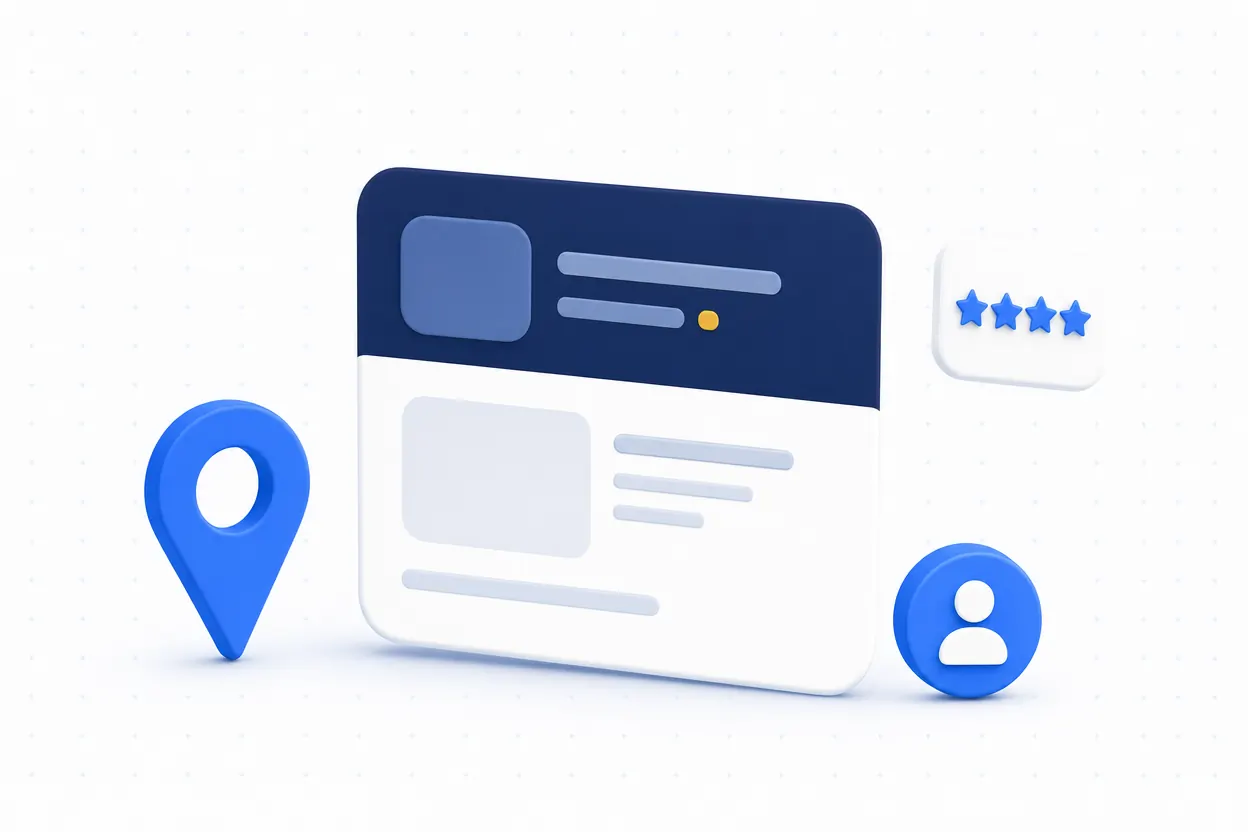
- Identity: business name, specific niche, and the exact services offered.
- Location: physical address, city, state, zip code, and service area.
- Reputation: Google rating, review count, and recent review trends.
- Digital presence: website status, online booking tools, and listing completeness.
- Contact data: owner emails, cell phones, and direct business contacts.
- Operational details: operating hours, size signals, and opening dates.
The defining trait
Local business data is organized around the business and its local market. It is not organized around corporate job titles and org charts.
What a record looks like in practice
Here is what that means in practice. Imagine a single data record for an independent med spa operator in Texas.
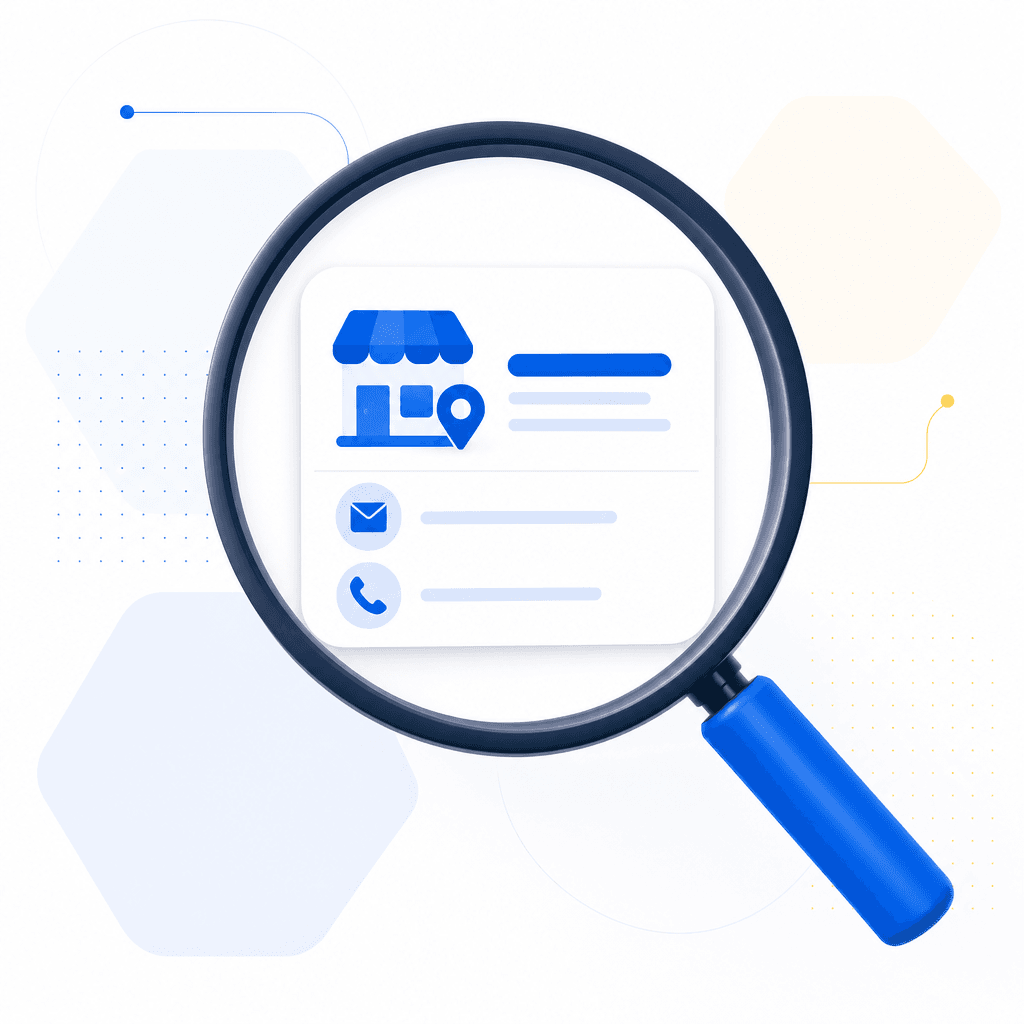
A useful local business data record tells you what services they offer, where they operate, how strong their reviews are, whether the website works, and whether there is an online booking flow.
Most importantly, it helps you reach the owner, operator, or medical director instead of leaving you with a generic inbox. From that one record, you can write a specific message about a problem the business might actually care about.
A corporate B2B record for the same business is rarely useful because it often gives you a vague headcount estimate and a generic inbox. That does not help you book a meeting with the person running the clinic.
Where local business data comes from
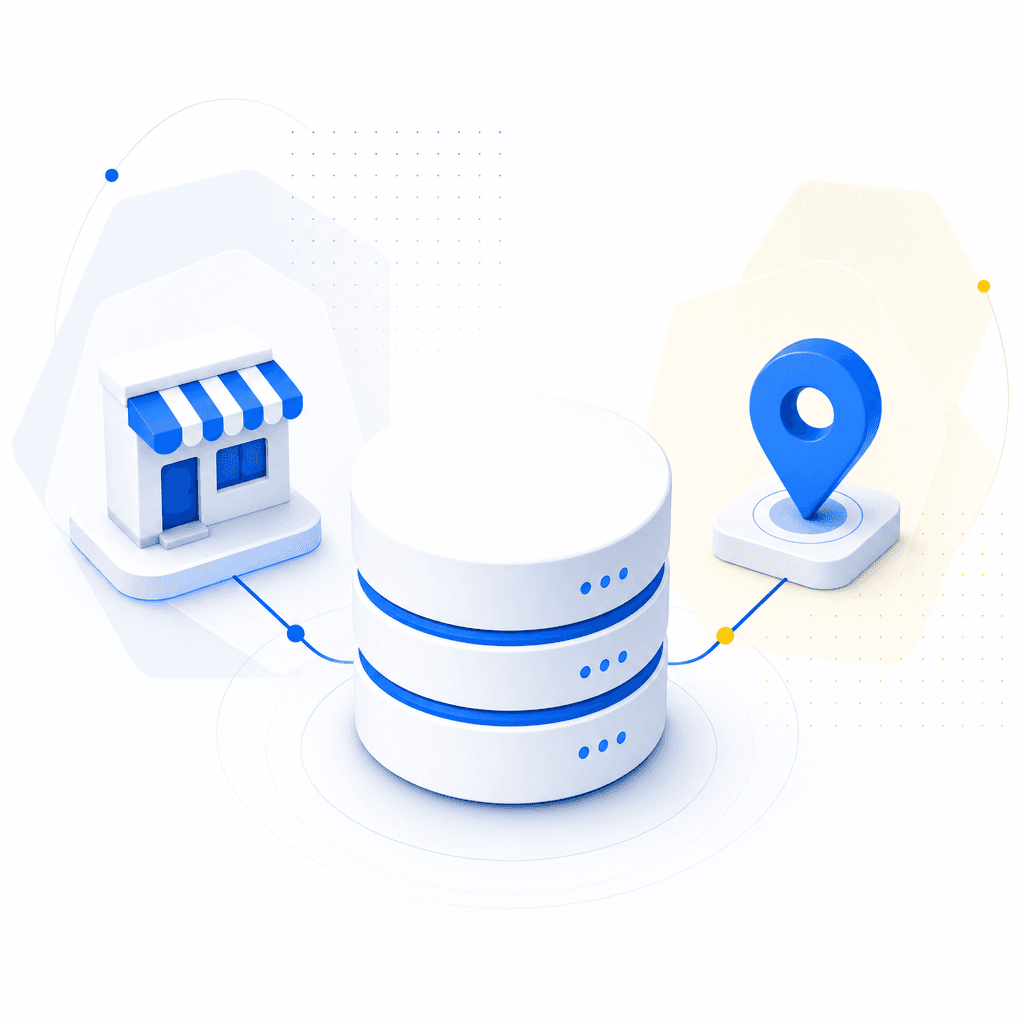
Local business data is assembled from several public and semi-public sources, then cleaned, matched, and enriched into usable records. No single source is complete on its own, which is why matching and verification matter.
The real value is not in any single source. The value is in combining enough sources to understand the business, identify the right contact path, and give your outreach a reason to exist.
- Map and listing platforms that catalog businesses by category and location.
- Review platforms that contribute ratings, review counts, and customer sentiment.
- Business websites that confirm services and operating hours.
- Public records and directories that add registration and location details.
- Enrichment layers that append verified owner emails and phone numbers.
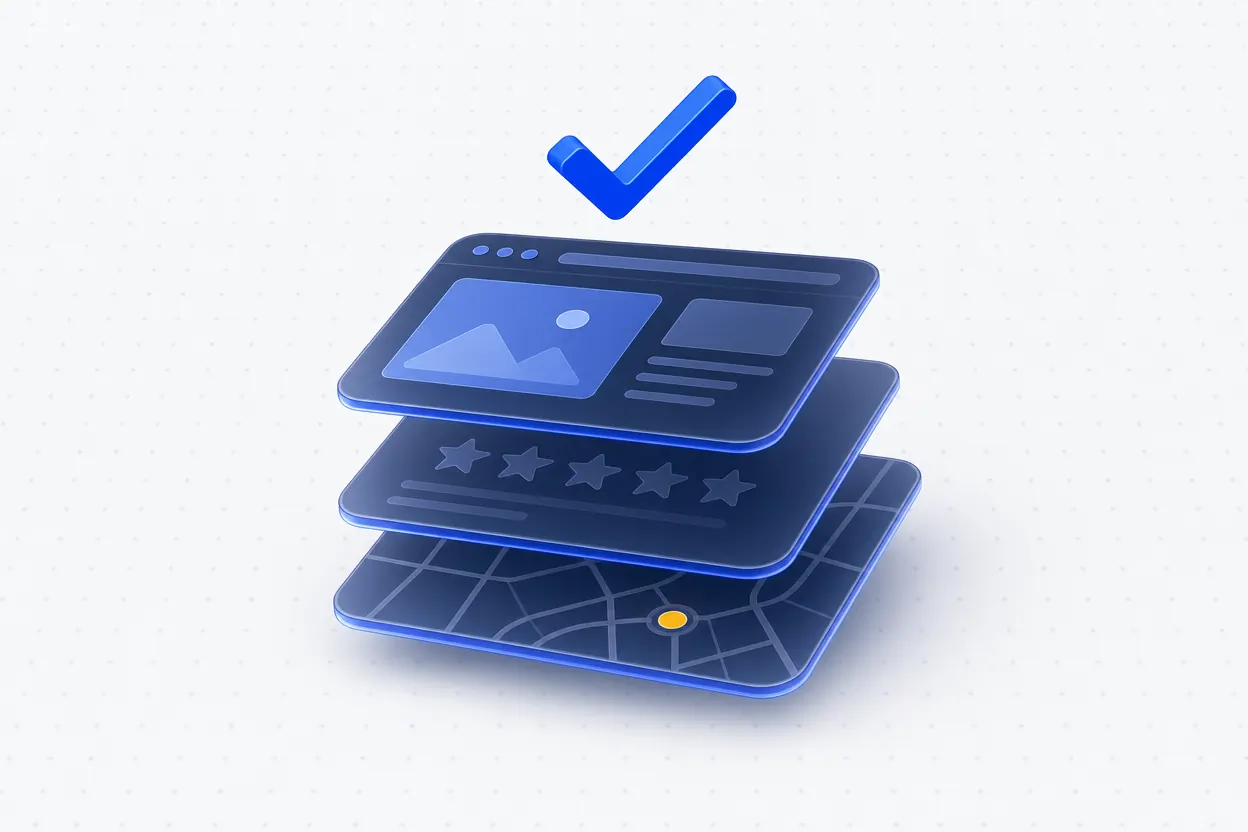
This is what enrichment adds to your outbound motion.
Local business data vs corporate B2B data
This distinction trips up almost every sales team I talk to. Corporate B2B data and local business data answer different questions, and using the wrong one for your market is one of the fastest ways to make outbound feel harder than it should.
Two different kinds of data
| Dimension | Corporate B2B data | Local business data |
|---|---|---|
| Organized around | Companies, departments, and job titles | Businesses, categories, and local markets |
| Key attributes | Headcount, revenue, funding, tech stack | Category, geography, rating, reviews, website status |
| Target contact | Corporate employees and department leaders | Owners, operators, and local decision makers |
| Best for | Selling software to other tech companies | Selling to storefronts, clinics, and contractors |
| Buyer signals | Hiring, funding events, technology installs | Weak reviews, broken site, recent opening |
A corporate database might tell you a company uses a specific CRM. Local business data tells you a roofing contractor has great reviews but a broken website. That is a more actionable sales signal, and it is how this changes prospecting entirely.
Why radius filters are not enough
Many sales reps draw a fifty-mile circle around Dallas and call that their market. That can be useful for some local services, but it is not the same as market coverage. If you sell to HVAC contractors, the market is the category, not the circle.
Market coverage means finding the businesses that fit your offer across the cities, regions, or service areas you can actually sell into. A narrow radius can hide good prospects just outside the line and include bad-fit businesses inside it.
The perfection trap
Many founders obsess over getting perfectly clean data before they send anything. That slows them down.
Local data does not need to be flawless to be useful. The owner is usually close to the buying decision, and local categories are large enough that you can be selective without chasing one perfect record forever.
If a record is incomplete or clearly wrong, move to the next qualified business. The goal is not perfection. The goal is enough accurate owner data to create meetings.
The single decision maker advantage
In corporate B2B sales, you often have to navigate a complex buying committee. You pitch an end user, who pitches a manager, who needs approval from procurement. Local business sales can be more direct.
The owner is usually close to the decision for the entire business. If you reach them with a relevant offer, the path to a yes is often shorter than it is inside a corporate buying committee.
How teams use local business data
Local business data powers the whole local sales motion. It takes you from building a target list to running the actual outreach, and the same dataset supports several critical jobs for your sales team.
- Market mapping: finding how many businesses fit your ICP in a specific category.
- List building: assembling targeted lists by niche, location, and fit signals.
- Personalization: using real attributes to write outreach that references the specific business.
- Prioritization: ranking prospects by signals that indicate a reason to reach out now.
- Execution: feeding enriched records into a CRM or an automated outbound workflow.
Some teams also connect local business data into their own tools. With the right setup, a team can search by category and market automatically,
then enrich the owner contact and push the records directly into a sequence.
The execution trap
Having great local business data is only step one. The setup work required to use that data is the trap that kills most teams: buying domains, setting up inboxes, managing warmup, writing copy, building sequences, and handling replies.
Founders can lose weeks managing setup instead of selling. This is why we built Fullpilot: you get local business data and outreach execution in one place, with the AI SDR reducing the setup burden for your team.
Check out Fullpilot pricing to see how we handle domains, sending, and reply handling automatically.
Deliverability and reply rates
When you sell to local businesses, replies matter more than opens or clicks. Local owners can be reachable because there are fewer layers between you and the decision-maker, but deliverability is a hidden part of your reply rate.
A strong campaign starts with the right business, the right owner contact, a relevant reason to reach out, and a sending setup that protects your domain. If your emails land in spam, even a strong list will underperform.
What makes local business data high quality
Not all local data providers are created equal. Evaluate sources based on how they affect your coverage and reply rate, not just how many rows they can export.
- Coverage: it must include the actual local categories you sell into.
- Accuracy: contact data must reach the real owner, not a dead inbox.
- Freshness: ratings and website status must reflect the current state of the business.
- Completeness: each record must tie identity, reputation, and contact together.
- Actionability: the signals present must give you a concrete angle for outreach.
Quality test
Good local business data does not just describe a business. It tells you who to contact and exactly why you should reach out right now.
Why local business data matters now
The local economy is enormous and underserved by traditional sales tooling. Restaurants alone directly contribute an estimated $1.4 trillion in U.S. output according to the National Restaurant Association, and that is just one local vertical. For years, the best data and software were aimed at corporate B2B while teams selling to local businesses were left scraping directories and guessing at contacts.
That gap is why local business data has become its own distinct category. It is not just a list of nearby companies; it is the operating system for finding local buyers and turning them into meetings.
- Most businesses are local: storefronts and contractors vastly outnumber corporate tech companies.
- Owners are reachable: local decision makers can often be reached directly.
- Signals are honest: a broken site is a clearer buying trigger than inferred corporate intent.
- AI helps with execution: software can find, enrich, and reach local businesses without forcing a rep to babysit every step.
As discovery and outbound become more automated, accurate local data becomes more valuable. You can find the right businesses faster, personalize at scale, and reach owners before competitors who rely on generic corporate lists.
Frequently asked questions
Is local business data the same as a business directory?
No. A directory just lists businesses. Local business data is richer because it adds reputation signals, website status, category context, and owner contact data, then organizes those fields so you can find, prioritize, and reach the right businesses efficiently.
How is local business data different from a lead list?
A lead list is a static output. Local business data is the underlying source that lets you filter, enrich, and rebuild a targeted list as the market changes. That is why exporting lead lists is powerful.
Who uses local business data?
Agencies, software companies, suppliers, and financing providers use it daily. Any team that sells to local businesses needs this data, and technical teams also use it to build automated outbound for local markets.
How accurate is local business data?
Accuracy depends on how the data is sourced, matched, and verified. No single source is complete, so the most reliable local data is aggregated, refreshed, and checked so outreach reaches the real owner instead of a dead inbox.
Can I estimate my total reachable market?
Yes. Your reachable market is your total market coverage: the number of businesses in your target category with a usable path to the decision-maker. We built a tool to help you estimate your pipeline and model what that looks like for your niche.
Putting it to work
Local business data is only valuable when it turns into conversations. The path is consistent across every successful local outbound motion: define your local ICP, build a precise list, read the signals, reach the owner, and run disciplined follow-up. If you want the full step-by-step version, our guide on how to find local business leads walks through every stage in detail.
The Fullpilot Local Database is built on local business data from the ground up. Search by category and market, enrich the owner, and export the audience when that is all you need. Or work with our campaign team and AI SDR when you want Fullpilot to prepare and run the outreach too. If you want to map your true market coverage today, book a call and we will help you.
Bottom line
Local business data is the structured record of the local economy. Used well, it is the foundation of every effective local outbound motion.
Fullpilot
Win the Local Business Market
Find every business, reach every owner, and launch the outbound engine built for local.
Start for free