I have tested the lead finders most teams compare: Apollo, ZoomInfo, LinkedIn scrapers, cheap local list builders, and expensive enterprise databases. The pattern is clear. Tools built for corporate B2B can be useful, but they often struggle when the buyer is a local owner who is not active on LinkedIn and does not fit a neat org chart.
I ran them against real local markets with real campaigns and real money on the line. I burned domains. I chased bad data. I want to tell you what I actually learned, because almost none of it shows up in the feature comparisons on their landing pages.
When you sell to local businesses, you realize very quickly that the standard B2B playbook does not map cleanly to this market. The legacy tools are built for selling to SaaS companies in San Francisco. They are not built for reaching the guy who runs a 15-truck HVAC business in Texas.
Here is the short version. Local outbound comes down to exactly two numbers. Get them right, and outbound feels like a machine. Get them wrong, and you will burn months blaming your copy or your sales reps when the real problem was upstream.
The two numbers
Market coverage: How much of your actual market you can identify, enrich, and reach. Reply rate: How many of them respond. Everything else is secondary.
Number one is market coverage
Market coverage is the part many teams ignore. It is the percentage of your actual market you can identify, enrich, and contact. If your lead finder only shows a few hundred local businesses in a category that clearly has thousands of operators, you do not have a complete market. You have a thin slice of it.
Most tools quietly cap your coverage. Why? Because they were built for corporate contacts. You log into a legacy database, search your category, and get a few hundred matches with real owner data. Then you run dry. You have technically found leads, but you have not found your market.
This is the insight the whole playbook rests on. There is no clean, centralized corporate database for a category like yoga studios, med spas, or roofers. The businesses exist, but the contact data is scattered across the internet, often buried behind gated directories.
When your market coverage goes from a few hundred to your entire addressable market, everything downstream changes. You stop rationing leads and start picking the best-fit businesses instead of contacting whoever the database had available.

High market coverage lets you stop rationing leads. Fullpilot is built to cross-reference maps, public records, business profiles, websites, and local citations so you can find more of the real local market instead of only the businesses that happen to appear in a corporate database.
This fundamentally shifts what you can actually search for when building a campaign.
I see founders make this mistake constantly. They tell me their market is plumbers in Chicago. I ask them why they only sell to Chicago.
They say it is because their current lead tool only lets them search one city at a time. They are letting their software dictate their business strategy.
If your software works for a plumber in Chicago, it works for a plumber in Dallas. Your market is every plumber in the country.
When you finally get a tool that gives you true market coverage, your addressable market expands overnight. You go from a few hundred prospects to tens of thousands.
Number two is reply rate
Reply rate matters more than opens or clicks. A local lead finder only helps if the outreach reaches the owner and gives them a reason to answer. A large list with weak contacts still produces silence.
People love to track open rates, but they are a vanity metric. Apple Mail and Google automatically open emails in the background. Your software tells you a prospect opened the email five times, but in reality, they never even saw it.
Optimize for replies. A campaign with real replies can become meetings. A campaign with no replies is just noise you paid for, no matter how big the list was.
The best local campaigns usually have three things working together: you reach the owner instead of a shared inbox, you reference a specific local signal, and your sending setup is clean enough that the message actually lands.

Local owners are often more reachable than corporate buyers because there are fewer layers. You may be emailing the person whose name is on the lease. When the message is relevant and actually lands, the path to a conversation is shorter.
But landing in the inbox is where many teams lose. Poor domain setup, rushed sending, and generic copy can bury a good list before a local owner ever sees it.
The setup work slows teams down
Even when people get the data right, they hit the exact same wall I hit: The setup. To run real local outbound, you need dedicated sending inboxes, secondary domains, and weeks of 'warmup' time.
Managing the sending setup is tedious. If you use your main company domain for cold outreach and push too hard, you can damage the same domain your customers and partners use to reach you. Fullpilot handles the sending layer so your team is not trying to learn domain setup while also trying to sell.
I sent a thousand emails to local gym owners from my main domain. Three days later, my regular business emails started going to spam. I couldn't even email my own investors. Fixing a burned domain takes months of painful rehabilitation.
Secondary domains and dedicated inboxes can help, but buying and managing them is a headache for a sales team. Sales reps should be selling, not acting as IT administrators. Many teams get stuck here, then blame outbound when the real issue was setup.
In many cases, outbound was not the problem. The missing piece was execution. A basic lead finder hands you a spreadsheet. You still have to turn it into meetings.
What every data source taught me
I did not arrive at market coverage and reply rate from a whiteboard session. I got there by being disappointed, repeatedly, while burning my own cash. Let's look at why the standard options fail local outbound.
LinkedIn scrapers are a weak fit for local operators
LinkedIn scrapers are usually a weak fit for local business outreach. Local owners are not living on LinkedIn. If you rely on social profile data for trades, restaurants, clinics, or home services, you can miss a large part of the actual market.
Google Maps scrapers have volume but inconsistent contact data
Then there are the cheap local list builders. These tools scrape maps or directories and hand you a spreadsheet. The problem is contact quality: many records only include generic addresses like info@ or contact@, so the list still needs owner enrichment before it can produce meetings.
Franchise directories and corporate gatekeepers
Some teams try to build their market by scraping franchise directories. They pull a list of every single fast food operator in a state.
The problem is that franchises are often insulated by corporate firewalls. The contact data points back to a generic corporate form.
You are not reaching the local operator who makes the buying decision. You are reaching a marketing intern at headquarters. This destroys your reply rate.
Every single one of these tools optimized for the wrong thing. They competed on filters and database size. That is the stuff that demos well on a Zoom call.
But they quietly failed on the two things that actually decide whether you book a meeting.
Local Lead Finders Compared
| Feature | Legacy B2B Tools | Cheap Map Scrapers | Fullpilot |
|---|---|---|---|
| Market Coverage | Often thin for local markets | High volume, low quality | Broad local market coverage |
| Contact Quality | Corporate titles only | Generic info@ emails | Verified owner/operator data |
| Deliverability | You manage it entirely | You manage it entirely | Fully managed by AI SDR |
| Execution | Spreadsheet export only | Spreadsheet export only | AI sends, follows up, handles replies |
Why local data does not need to be perfect
Let me tell you the part that surprised me most about testing all these tools. Local data does not need to be perfect to win.
With corporate data, you obsess over getting the exact right title at the exact right company. You need the Director of Demand Gen, not the VP of Marketing.
With local, the owner is usually the single decision-maker. The business is small enough that one contact can say yes and sign a check.
You do not need a complex org chart. You just need the owner.
Because the local market is so large when you map the whole category, you can afford to be selective. You do not have to fight for one perfect record.
You get the whole category, filter out the franchises if you only want independents, and pick the best fits. If a few emails bounce, it does not matter.
You have thousands more businesses in the category. Market depth fixes the perfection problem. You just need enough accurate owner data to feed the machine.
Why we built Fullpilot this way
After testing everything, the conclusion was obvious. If market coverage and reply rate are the only two numbers that matter, build the tool that maxes out both.
And equally important: remove the setup work that kills them.
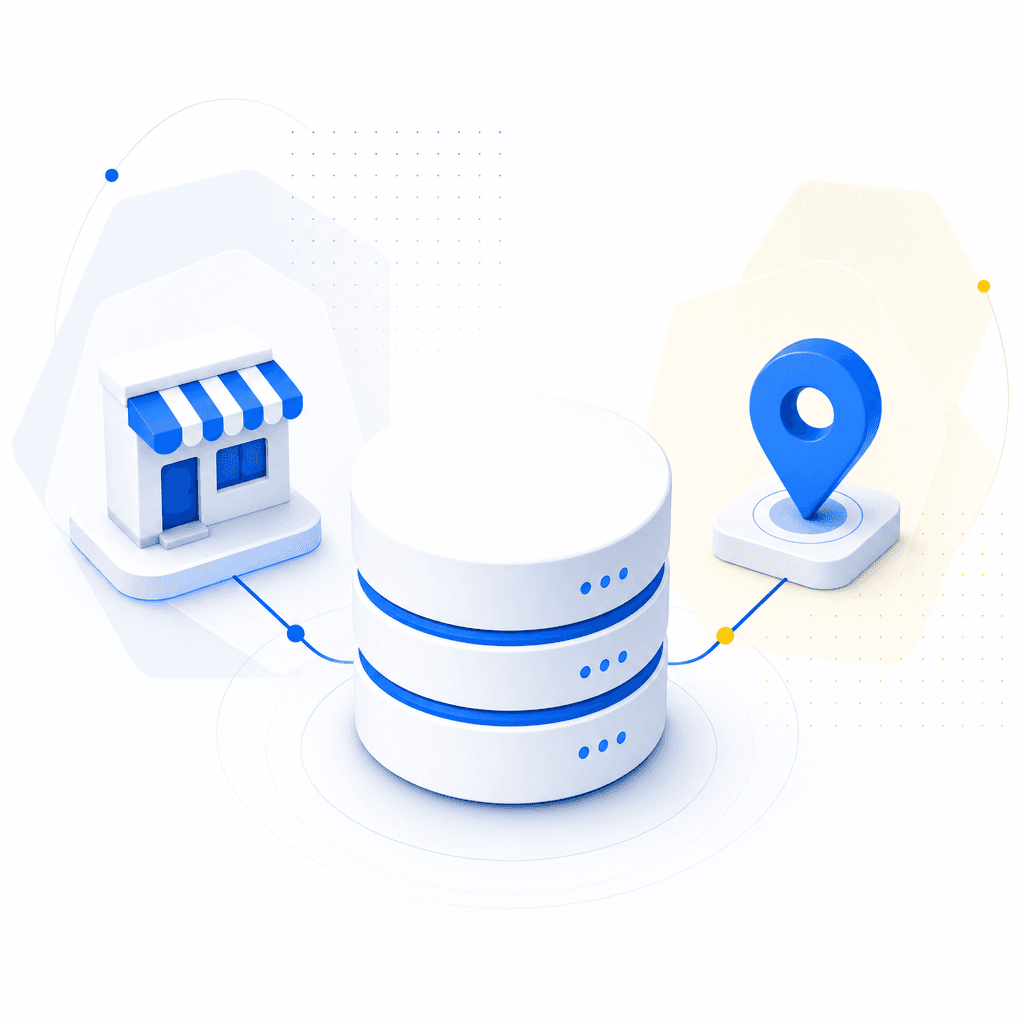
That is why we built the Fullpilot Local Database as a product inside a broader outbound service. Use the database to map and export the market yourself, or combine it with our campaign team and AI SDR when you want the outreach run for you.
We map and enrich local markets so you can build a much deeper list than a basic corporate search usually provides.
You can find the med spas, dental clinics, roofing companies, restaurants, or gyms that fit your offer. Then Fullpilot can run the outreach.
We handle the domains, the inboxes, the warmup, and the deliverability. Your reply rate is not at the mercy of a sending setup you have never done before.
The AI SDR removes the trap for the whole team. And it works for the whole team, not just one rogue rep with a downloaded spreadsheet.
When the data and the execution live in one place, everyone is working the same market with the same engine. The follow-up never falls through the cracks.
The work moves toward booked meetings instead of sitting in someone's drafts.
That is how the AI SDR works in practice.

Lead finder plus duct tape
The way I used to do it
Stitch together a data tool, an inbox tool, and a sequencer, then hope your coverage and your deliverability both hold up.
- Capped coverage: a few hundred records, then you run dry
- Generic inboxes, not the owner
- Buy and warm domains, manage deliverability yourself
- Write copy, build sequences, watch replies by hand
- Reply rate cratered by setup mistakes
Market coverage plus reply rate, handled
The way Fullpilot does it
Scrape and enrich your entire local market, then let the AI SDR run the outreach for your whole team, with deliverability built in.
- High market coverage for your local category
- Owner and operator contact data, enriched
- No domains or inboxes to set up yourself
- AI SDR writes, sends, follows up, and handles replies
- Reply rate protected by built-in deliverability
Frequently asked questions about local lead finders
Does geography matter for local lead generation?
Only if your product is geographically locked. If you sell software to gyms nationwide, your market is every gym in the country.
Do not restrict your search to a 50-mile radius just because a tool forces you to use a map filter. Market coverage means capturing the entire category, regardless of zip code.
Why not just buy a list from a broker?
Because list brokers often sell old data to many buyers. By the time you get it, the contacts may be stale and the inboxes may already be tired of similar pitches.
You need fresher, enriched data if you want a real chance at replies.
How do I handle replies if I send thousands of emails?
This is exactly why we built the AI SDR. Managing replies manually at scale requires a dedicated team.
The AI SDR reads replies, categorizes them, handles common questions, and routes interested prospects to your team.
What is the best way to verify local contact data?
You have to cross-reference multiple sources. A single directory is never enough for local businesses.
You need to check social profiles, state registries, and local citations to confirm the owner. Fullpilot automates this entire enrichment process for you.
How to judge any lead finder for local
If you are evaluating tools, ignore the feature checklist. Ignore the flashy UI. Ask the questions that actually decide your outcome.
- Market coverage: can it pull my entire local market, or does it cap me at a few hundred records with real owner data?
- Reply rate: does it reach the owner, and does it protect deliverability, or does it hand me a list and walk away?
- Setup: do I have to build the inbox, domain, and sequencing layer myself, or is execution included?
- Team: does this work for my whole team in one place, or is it one rep babysitting a tool?
If a tool gives you strong market coverage, reaches the right buyer, and reduces the setup work, it will usually beat a tool that only has more filters.
That is the standard I would use before buying any local lead finder.
Bottom line
Market coverage and reply rate decide local outbound. Reach your entire market, reach the owner, protect deliverability, and skip the setup. That is the whole playbook, and it is why we built Fullpilot.
If you want to see it on your own category, book a call and we will map your market.
We will show you the available market and decide whether you want data only or full AI SDR execution. You can also estimate your pipeline first to see the math for yourself.
Check out Fullpilot pricing to see how it scales with your team.
Fullpilot
Win the Local Business Market
Find every business, reach every owner, and launch the outbound engine built for local.
Start for free